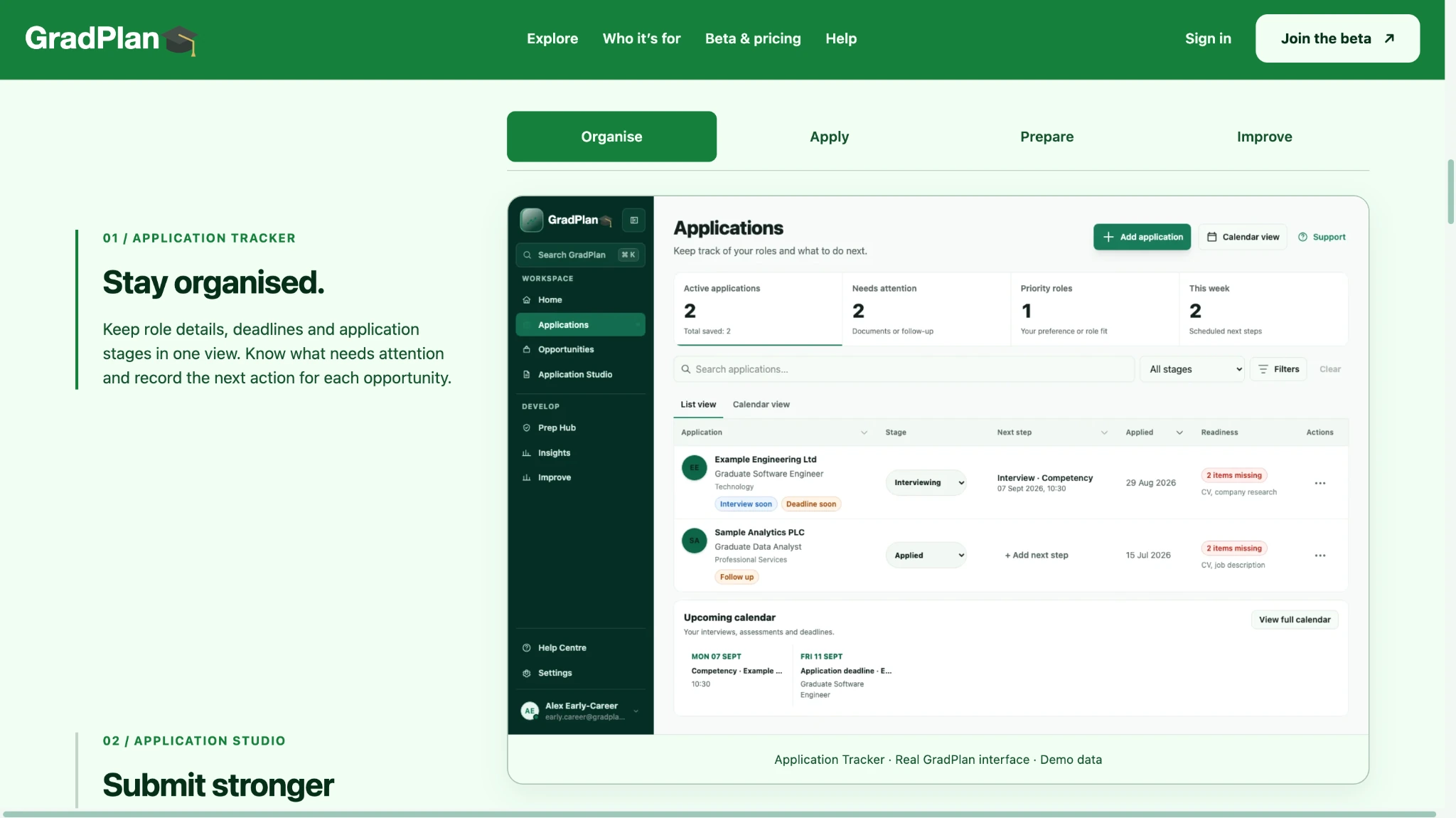
 View full screen
 01 / Organise
Application tracker
Role details, stages, deadlines and upcoming actions in one place.
Open screenshotA project of my own
The story of a career platform I’m developing alongside my finance role — and the decisions, challenges and lessons behind it.
What I’m building
GradPlan brings application tracking, documents and preparation into one workflow. These screens show the product I’ve been working on; the case study explains the thinking behind it.
View screenshot A look at the work
Select a screen to take a closer look.
Use the arrows to move
through the gallery.
Actual screenshots from the GradPlan site, dated 19 September 2026. The embedded app previews use demo data. They document that version, not today’s feature availability or measured results.
View full screen Role details, stages, deadlines and upcoming actions in one place.
Open screenshot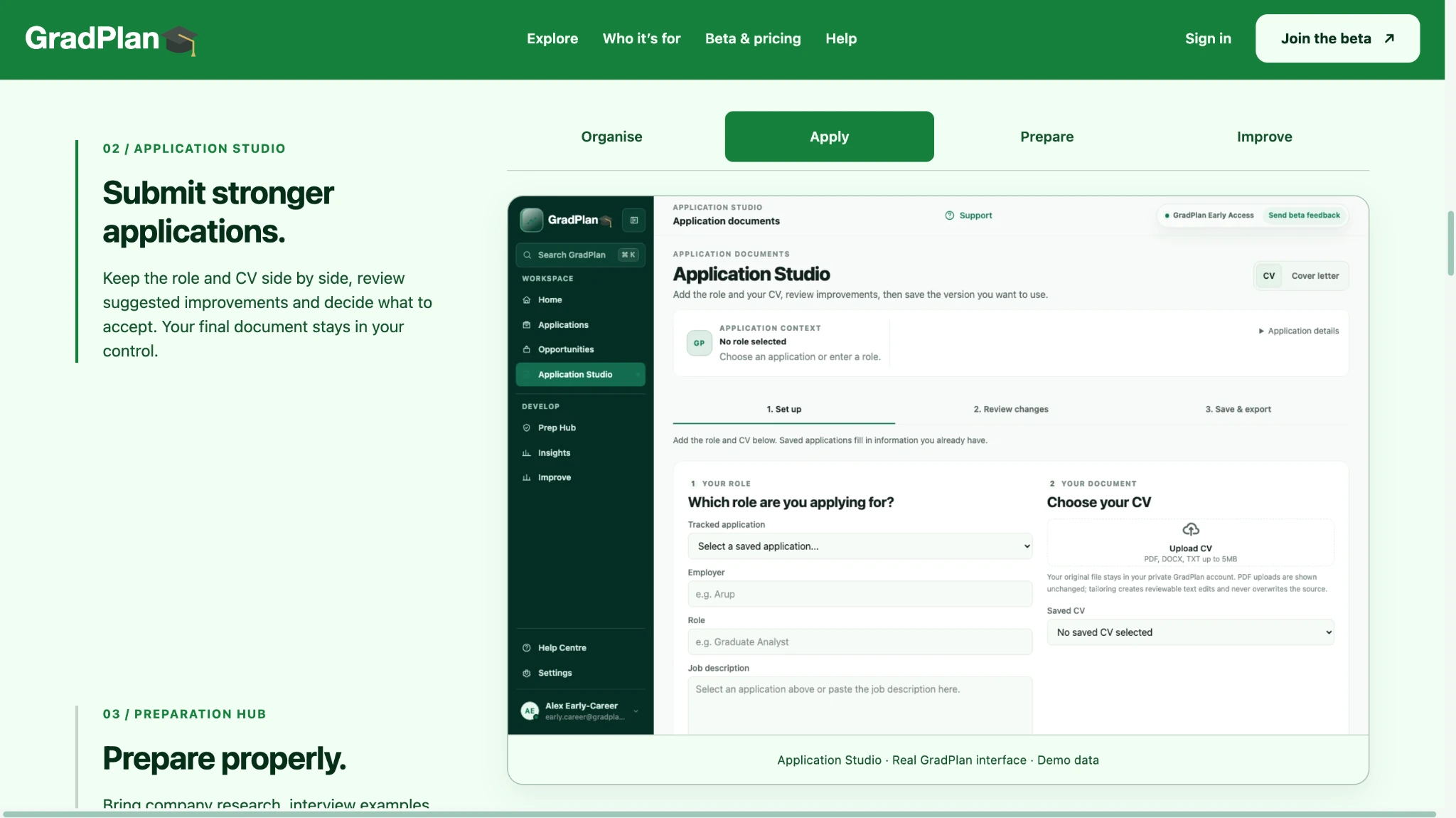 View full screen
 An application workspace that brings the selected role and CV together.
Open screenshot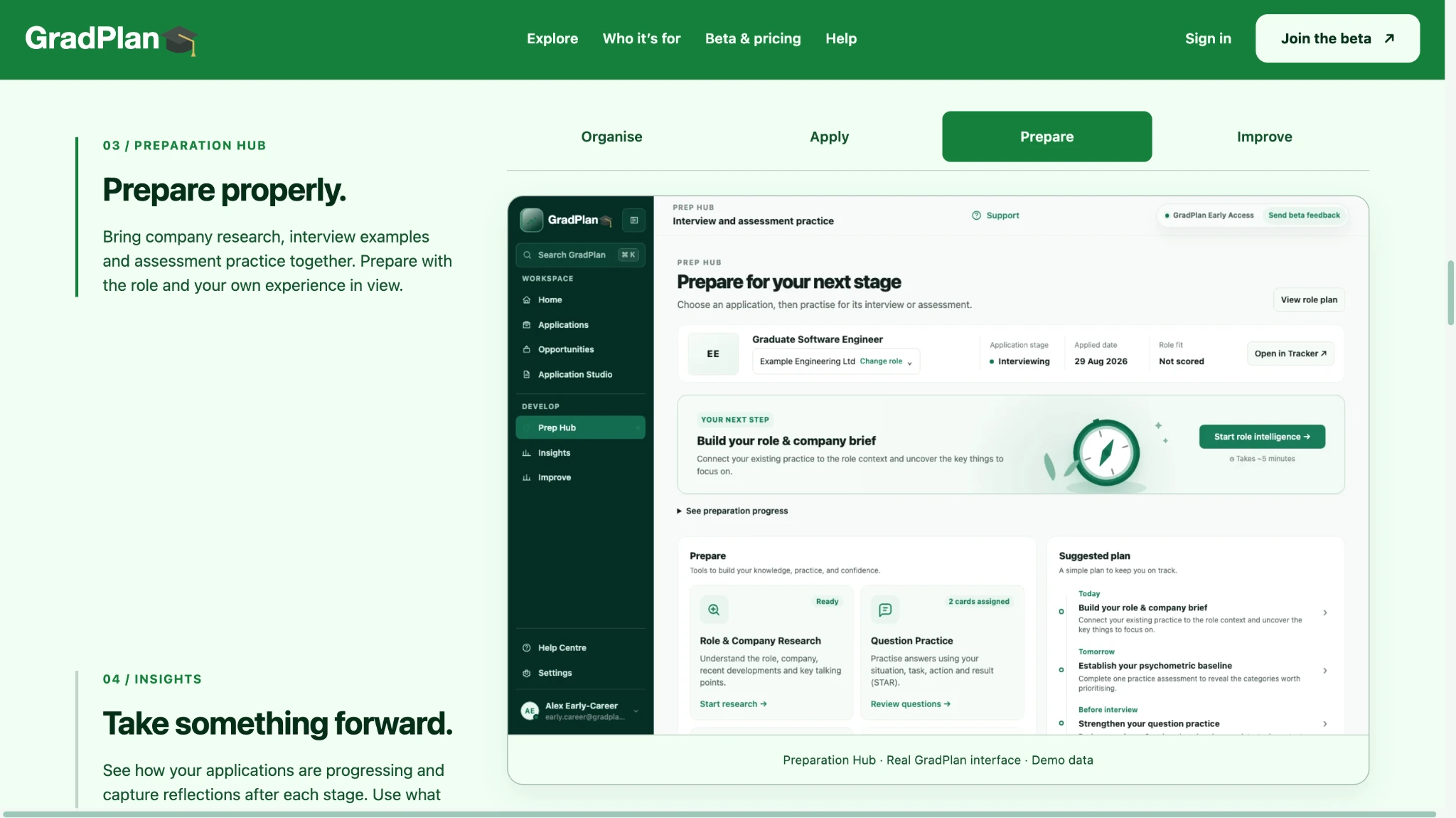 View full screen
 Role research and practice organised around the next application stage.
Open screenshot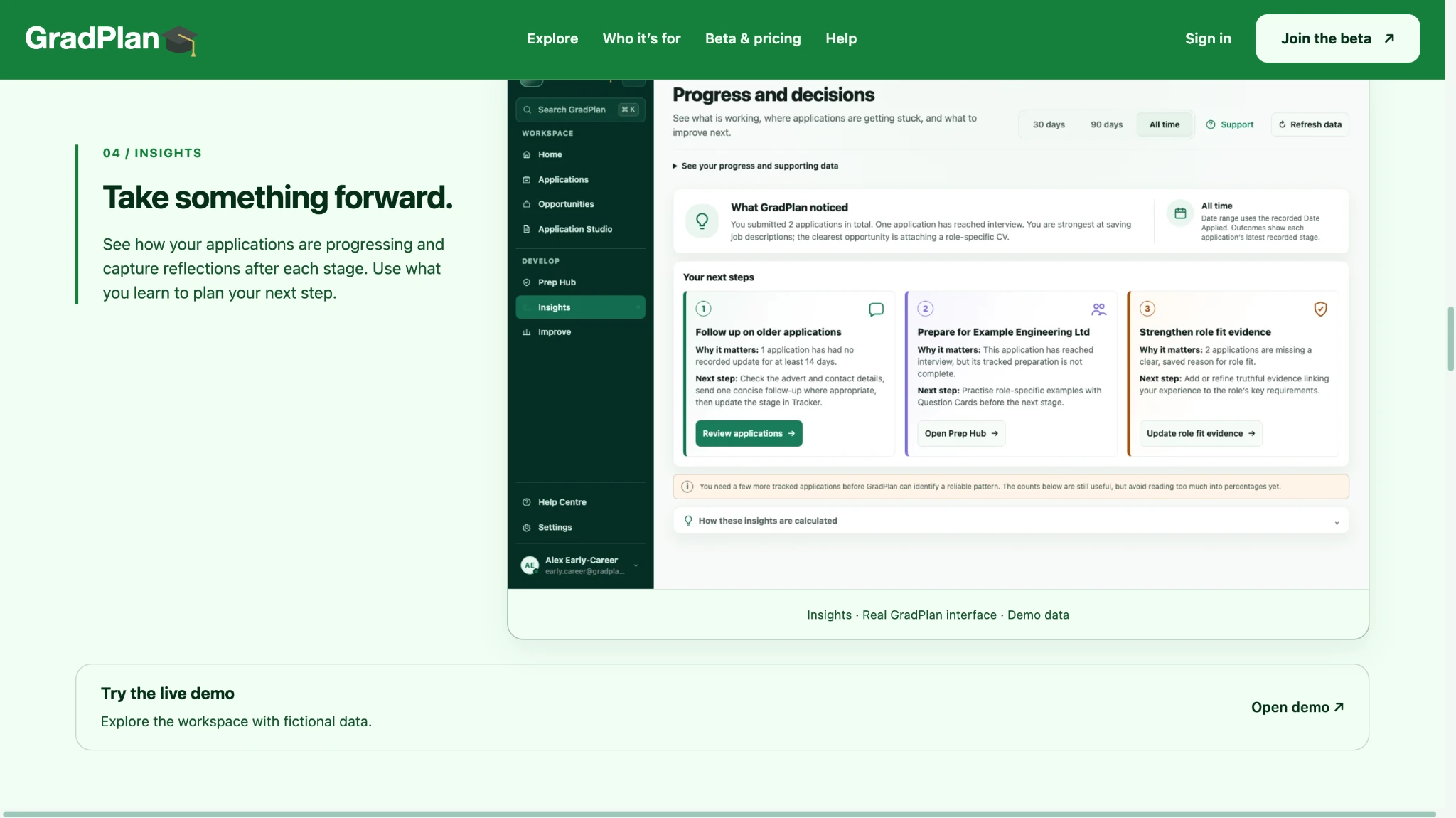 View full screen
 Progress and suggested next actions, with the application context retained.
Open screenshot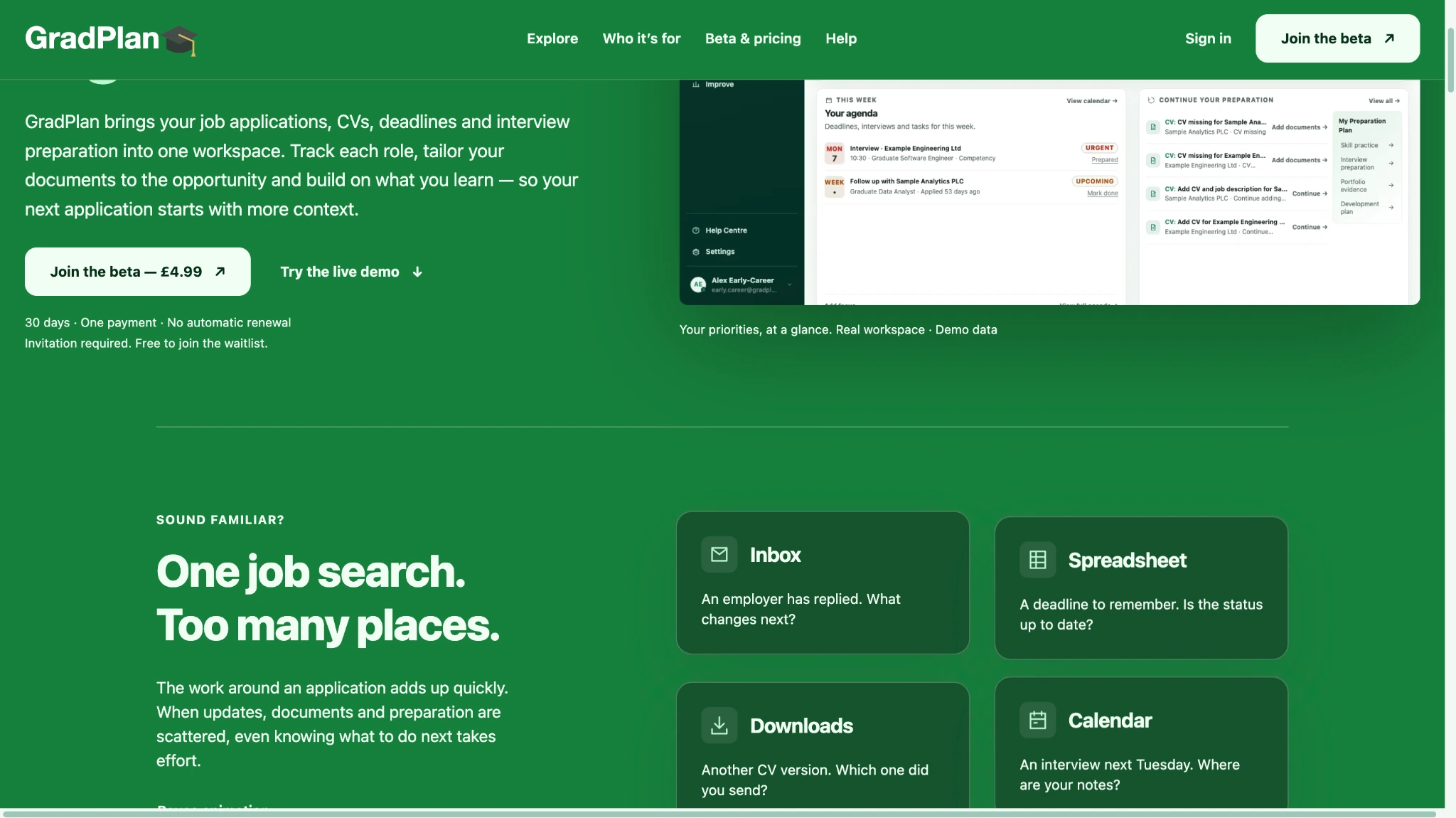 View full screen
 How I explain the problem and introduce the application workflow.
Open screenshotEach screen is a starting point for a product question — not a claim that the design has already solved it.
Explore my approach01 / The problem
Early-career applicants often manage job descriptions, deadlines, documents and preparation across separate tools. My starting hypothesis was that keeping those pieces connected could make the next action clearer.
A spreadsheet or notes app remains a credible alternative. The question is where a dedicated product adds enough value to justify changing that workflow.
02 / My contribution
Map user journeys, workflows, dependencies, edge cases and failure states into product requirements.
Prioritise core functionality against user value, feasibility, cost and delivery effort.
Work on frontend functionality, APIs and integrations, with AI assistance in development.
Use structured feedback, usability testing and product analytics to inform iterations. Specific findings belong beside their evidence.
03 / What I’m still learning
This portfolio separates implementation from release status, and testing activity from measured outcomes. It does not assume that a feature improves applications or hiring outcomes simply because it exists.
Development happens alongside full-time work, with trade-offs around scope, operating cost, third-party services and release readiness. Detailed security material and private user data do not belong in a public case study.
The gallery preserves historical demo screenshots. In particular, visible upload controls do not establish that uploads are currently available; the previously reported release pause is not overridden here.